Introduction
A Florida property deed is the foundational legal document that transfers real estate ownership — and getting it wrong has real consequences. Florida law sets specific statutory requirements for how deeds must be drafted, executed, and recorded, and even minor errors can invalidate a transfer, create title defects, or leave a property owner vulnerable to fraud.
What makes this particularly frustrating is timing: deed problems rarely surface at closing. They show up later — during a refinance, a resale, or an estate settlement — when correcting them is expensive and sometimes impossible without court involvement.
This guide covers what you need to navigate Florida deed drafting and recording in 2026:
- The deed types used in Florida and when each applies
- What every valid deed must contain under Florida law
- The 2024 statutory changes still enforced today
- How to record properly with the county clerk
- The mistakes that create the biggest downstream problems
Key Takeaways
- A valid Florida deed requires grantor/grantee names and addresses, a legal description, consideration, two-witness execution, notarization, and preparer information
- Florida recognizes warranty, special warranty, quitclaim, and Lady Bird deeds — each offering different levels of title protection
- As of January 1, 2024, §695.26 requires witness postal addresses and a named individual preparer on every deed submitted for recording
- Recording protects ownership rights under Florida's §695.01 notice recording statute — an unrecorded deed is unenforceable against third parties
- Professional legal review before execution prevents most drafting errors
What Is a Florida Property Deed?
A property deed is the legal instrument under Florida law that conveys title to real property from a grantor (seller or transferor) to a grantee (buyer or recipient). The deed is distinct from title itself — the deed is the document that transfers the legal right of ownership.
Why Recording Matters
Florida Statute §695.01 is clear: a deed that is not recorded is not "good and effectual in law or equity against creditors or subsequent purchasers for a valuable consideration and without notice." Florida is a notice state — a subsequent purchaser for value who has no notice of a prior unrecorded interest can take priority over that prior interest.
Between the grantor and grantee, an unrecorded deed is still valid — the exposure lies with third parties. A creditor who records a judgment, or a buyer who purchases the same property and records first without notice, can legally defeat an unrecorded prior deed.
Drafting vs. Recording
These are two separate steps, and both must be done correctly:
- Drafting — creating the deed document that meets Florida's statutory requirements
- Recording — submitting the executed deed to the county Clerk of Court for inclusion in the public record
Skipping recording leaves your ownership vulnerable to third-party claims, no matter how clean the draft. Drafting errors, on the other hand, can create title defects that attach to the property and survive future sales.
Types of Deeds Used in Florida Real Estate
Florida recognizes several deed types, each suited to different transactions and offering different levels of title protection.
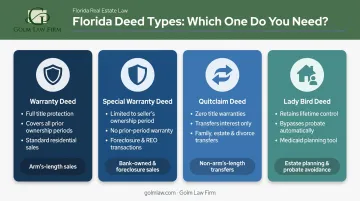
Warranty Deed
The warranty deed is the most common deed in Florida arm's-length real estate sales. Under F.S. §689.02, the grantor "fully warrants the title to said land" and agrees to defend it against the lawful claims of all persons — past, present, and future. This is the highest level of title protection a buyer can receive, making it standard in both residential and commercial sales.
Special Warranty Deed
The grantor warrants only against title defects arising during their own ownership period — not before. This narrower warranty is commonly used in:
- Commercial real estate sales
- Bank-owned and foreclosure properties
- REO (real estate owned) conveyances where the seller has limited knowledge of prior title history
Quitclaim Deed
A quitclaim deed transfers whatever interest the grantor holds — with no title warranties at all. Florida's statutory form under F.S. §689.025 "remises, releases, and quitclaims" the grantor's right, title, interest, claim, and demand. Common uses include:
- Transfers between family members
- Estate planning conveyances
- Divorce settlements
- Correcting defects in a prior deed
Lady Bird Deed (Enhanced Life Estate Deed)
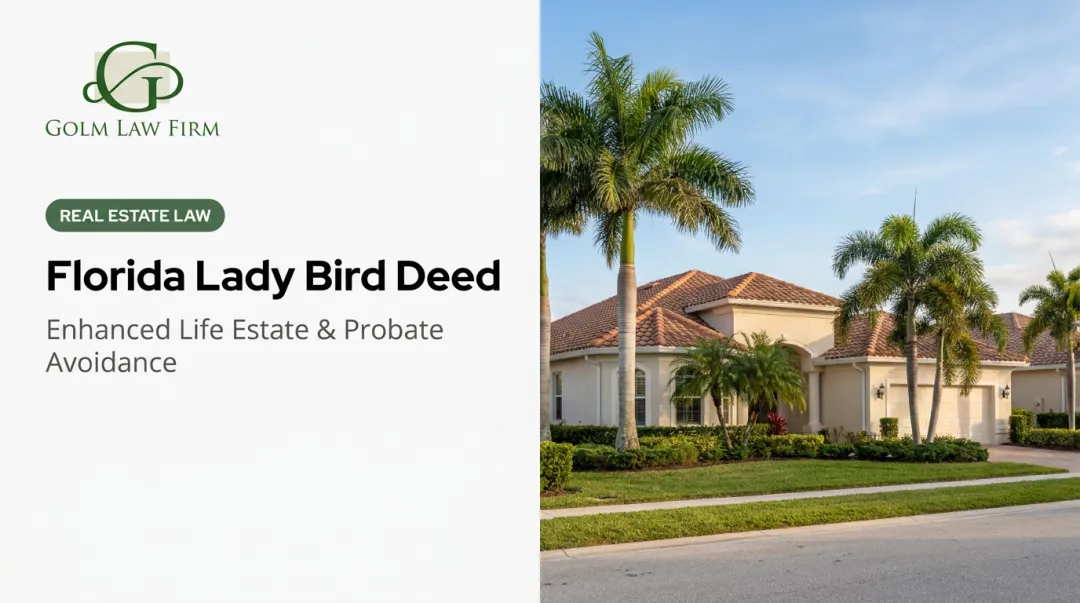
The Lady Bird deed allows a grantor to retain full ownership rights during their lifetime — including the right to sell or mortgage the property without the remainderman's consent — while automatically transferring the property to a named beneficiary at death, bypassing probate.
Florida's DCF policy manual expressly recognizes that because ownership transfers only at death, no transfer of assets has occurred for Medicaid purposes during the grantor's lifetime. That Medicaid-planning distinction is why seniors and estate planning clients across Florida frequently choose this deed over a standard life estate.
Trustee's Deeds and Personal Representative's Deeds
When property is conveyed out of a trust or an estate, the deed type and required documentation depend on the conveying party:
A Trustee's Deed requires documentation of the trustee's authority, typically through a certification of trust under F.S. §736.1017.
A Personal Representative's Deed is used to convey estate property. Under F.S. §733.613, title passes without court authorization only if the will grants a specific or general power of sale.
How to Draft a Valid Florida Deed: Requirements and Best Practices
Florida deed drafting is governed by specific statutes. Missing any required element results in clerk rejection or, worse, a defective deed that records but creates title problems.
Required Elements
Every Florida deed must include:
- Grantor's full legal name and address
- Grantee's full legal name and mailing address
- Statement of consideration (nominal language such as "ten dollars and other good and valuable consideration" satisfies this requirement)
- Words of conveyance (the granting clause that transfers the interest)
- Legal description of the property — street addresses and parcel ID numbers do not qualify; Florida law expressly states a parcel ID is not part of the legal description under §689.02
The Legal Description Requirement
This is where self-prepared deeds most frequently fail. The legal description must exactly match county property records, obtained from the prior deed or the county property appraiser.
Even small discrepancies create title defects that require a corrective deed or litigation to resolve:
- Metes-and-bounds measurements
- Lot/block/subdivision references
- Plat book citations
Get the description directly from the most recent recorded deed, then verify it against the property appraiser's records before drafting.
Execution Requirements
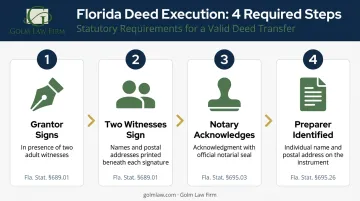
Under F.S. §689.01 and §695.03, a Florida deed must be:
- Signed by the grantor in the presence of two adult witnesses who are not parties to the deed
- Acknowledged before a notary public
- Each witness's name must be legibly printed beneath their signature
- As of January 1, 2024, each witness's postal address must also be printed beneath their name
The 2024 Preparer Disclosure Requirement
F.S. §695.26 requires that the name and postal address of the natural person who prepared the deed (or under whose supervision it was prepared) be legibly printed on the instrument. A business name alone is insufficient. This requirement was enacted by CS/CS/HB 1419, effective January 1, 2024, and remains enforced in 2026.
Reserved Clerk Space
The first page must have a 3-inch × 3-inch blank space in the top right corner reserved for clerk use. Each subsequent page requires a 1-inch × 3-inch space. Failure to provide these spaces may result in rejection or an additional page fee.
These requirements apply regardless of deed type, which is why drafting errors are so common in self-prepared instruments. Golm Law Firm, P.A. drafts deeds for property owners, investors, and developers across Florida at a flat rate of $475, with every statutory element verified before submission. If you are unsure which deed type fits your situation, a 30-minute consultation ($150, credited toward the deed fee if you retain the firm) will identify the right approach and flag any title issues before drafting begins.
How to Record a Deed in Florida: Step-by-Step
Step 1: Finalize and Execute the Deed
Before submission, confirm the deed includes:
- Grantor signature with two witnesses (names and postal addresses printed beneath each signature)
- Notary acknowledgment
- Individual preparer name and postal address
- Reserved clerk corner spaces (3" × 3" on page one; 1" × 3" on subsequent pages)
Any missing element will result in rejection. Corrections after execution may require a new document.
Step 2: Submit to the County Clerk of Court
The deed must be submitted to the Clerk of Circuit Court in the county where the property is located. Three submission methods are accepted:
- In-person at the clerk's office
- Mail to the recording division
- E-recording through approved vendors under F.S. §695.27, Florida's Uniform Real Property Electronic Recording Act — authorized in all 67 Florida counties
Step 3: Pay Required Fees and Taxes
Two costs apply at recording:
| Fee Type | Rate |
|---|---|
| Recording fee (§28.24) | $10.00 for the first page; $8.50 per additional page |
| Documentary stamp tax (§201.02) | $0.70 per $100 of consideration (most counties); Miami-Dade: $0.60 per $100, plus $0.45 surtax on non-single-family property |
Once recorded, the clerk affixes an official register number under §695.11. That number marks the moment the deed is legally deemed recorded. The clerk then indexes the deed by grantor and grantee name, and you can obtain certified copies directly from the clerk's office.
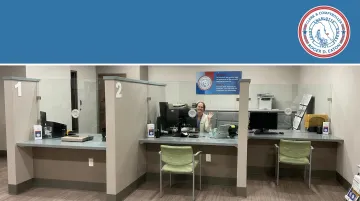
Property fraud alert programs are available at no cost through most Florida county clerks, including Hillsborough and Manatee Counties. Enrolling alerts you whenever a document is recorded against your name — a useful safeguard worth setting up after any deed is filed.
Common Deed Drafting and Recording Mistakes to Avoid
Drafting Errors That Create Title Problems
- Using a street address instead of a legal description — a street address does not legally identify the property being conveyed
- Misspelling grantor or grantee names — names must match government-issued ID and the prior deed exactly; a discrepancy creates a chain-of-title defect
- Wrong vesting language for co-owners — under F.S. §689.15, a transfer to two or more persons creates a tenancy in common by default; if survivorship rights are intended, the deed must expressly say so. Tenancy by the entireties is only available to married couples
- Using the wrong deed type — a quitclaim deed in an arm's-length sale leaves the buyer with no title warranties
Recording Failures
- Submitting without witness postal addresses (required since January 1, 2024 — the clerk will reject the deed)
- Submitting without the individual preparer's name and address (a business name alone is rejected)
- Forgetting to reserve the clerk's corner spaces
- Underpaying documentary stamp taxes — under F.S. §201.17, the Department of Revenue can assess unpaid taxes retroactively with a penalty of up to 50% plus 1% monthly interest, and failure to pay constitutes a first-degree misdemeanor
Downstream Consequences
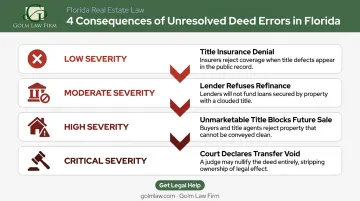
Errors that slip through recording can surface years later as:
- Title insurance denial or qualification
- Lender refusal to close a refinance
- Unmarketable title that blocks a future sale
- In severe cases, a court declaring the original transfer void
Most of these problems are entirely avoidable with accurate drafting from the start. Golm Law Firm handles deed preparation and recording for a flat $475 — so there are no billing surprises, and no gaps that come back to haunt a future closing.
Frequently Asked Questions
What are the requirements to draft and record a valid deed in Florida?
A valid Florida deed must contain several required elements:
- Grantor and grantee names and addresses
- Legal property description
- Consideration language and granting clause
- Two-witness execution with notarization
- Each witness's printed name and postal address
- Individual preparer's name and address
- Reserved clerk corner spaces
Recording requires submitting the deed to the county clerk with the recording fee and applicable documentary stamp taxes.
Who can draft a deed in Florida?
Florida law does not prohibit a property owner from drafting their own deed, but the complexity of legal descriptions, execution requirements, and statutory compliance makes errors common. Only licensed Florida attorneys may charge a fee to prepare deeds for others — Florida courts have found that nonlawyer preparation of deeds constitutes the unauthorized practice of law.
How much does Golm Law Firm charge to draft a deed?
Golm Law Firm offers deed preparation and processing at a flat rate of $475. If you first schedule a consultation ($150 for 30 minutes; $350 for 60 minutes with document review), that fee applies toward the deed service if you retain the firm.
Do I need to pay documentary stamp taxes when recording a deed in Florida?
Yes. Florida imposes documentary stamp taxes on deeds conveying real property for consideration at $0.70 per $100 of consideration in most counties. Notable exception: deeds transferred between spouses pursuant to a dissolution of marriage, with no money changing hands, are exempt from the tax.
How long does it take to record a deed in Florida?
E-recording is typically the fastest option — Miami-Dade reports recorded images available within 36–48 hours; St. Johns County posts recorder-stamped images within 24 hours of acceptance. Mail submissions take longer, and timelines vary by county. The deed is legally recorded the moment the clerk affixes the official register number under §695.11.
What happens if a deed is recorded with errors in Florida?
Errors discovered after recording generally require a corrective deed or scrivener's affidavit to be drafted and re-recorded. For limited legal-description errors in non-quitclaim deeds, F.S. §689.041 provides a statutory curative procedure. If the original grantor is unavailable or uncooperative, court proceedings may be necessary, underscoring the value of accurate drafting from the start.